Seeing Through The Whole - Ecclesiastes 3:11

We all see life through a specific lens that uses our unique background, beliefs, and past experiences as a filter to interpret everything that happens around us. Ancient mankind saw life events as cyclical, random, and chaotic. Seasons come and go; bad things happen without any reason and there was no way to anticipate and prepare for those times. Even though they were descendants of Adam and Eve knowing the truth, they chose to create a new understanding.
They did what the Apostle Paul describes in Romans 1:21-23 NIV, 21 For although they knew God, they neither glorified him as God nor gave thanks to him, but their thinking became futile and their foolish hearts were darkened. 22 Although they claimed to be wise, they became fools 23 and exchanged the glory of the immortal God for images made to look like a mortal human being and birds and animals and reptiles.
But Seth, the son of Adam chose a different path and held onto the knowledge provided by God in the beginning. Unlike surrounding cultures that worshipped multiple gods tied to specific forces of nature, ancient Israelites and Jews came to see the universe as the deliberate creation of God, who established its natural and moral laws. They believed the world was created with divine intent, where physical reality and human morality were deeply intertwined. The Jewish worldview was linear. History had a beginning (Creation), a developing relationship with God, and a destination (Heaven). Obeying God's commands brought order and blessing, while sin disrupted the ordered universe, the world - the total system of creation in its relationship to God and social balance. Scripture given by God served not just as a lawbook, but as the fundamental lens and blueprint through which they understood human purpose, ethics, and their place in history.
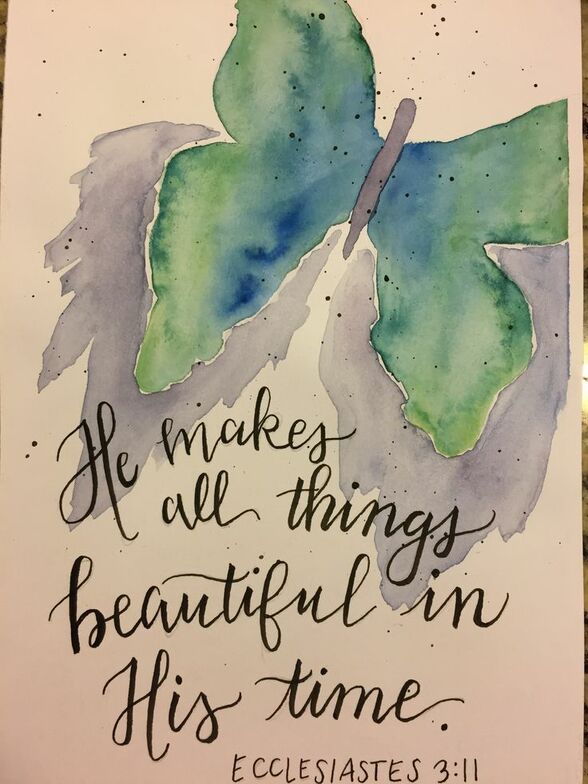
We must see this distinction to understand Scripture fully, especially when trudging through hardships. Ecclesiastes 3:11 NIV, “He has made everything beautiful (appropriate) in its time. He has also set eternity in the human heart; yet no one can fathom what God has done from beginning to end.” This is one of those verses that doesn’t really translate well, and you must read it out of multiple translations. The Living Bible gets I think closer, “Everything is appropriate in its own time. But though God has planted eternity in the hearts of men, even so, many cannot see the whole scope of God’s work from beginning to end.” The Young’s Literal Bible is even closer, “The whole He hath made beautiful in its season; also, that knowledge He hath put in their heart without which man findeth not out the work that God hath done from the beginning even unto the end.
I will confess there have been times when I have struggled looking through soul crushing events and seeing how anything beautiful or appropriate can come from it. It’s that word “everything” that has tripped me up at times. How can God bring anything of beauty out of this event? I wonder if Peter felt that way after denying Jesus three times.
I think we can see part of the answer in the words “The whole He hath made beautiful”. What is the whole? Genesis 1:31 NIV, “God saw all that he had made, and it was very good.” I believe the whole is the entirety of God’s plan and purpose for His creation as it marches forward and the understanding I am a part of His plan and purpose. So instead of solely focusing on the horrible events of life I must choose to look at them through the lens of God’s whole and complete plans and purpose for me and His Creation. He promises that your horrible events will be blended in with the totality of His plans and purpose and will be made somehow beautiful.
Then we have the words, “that knowledge He hath put in their heart”. What knowledge? That God is working His plans to achieve His purpose which will allow all our events of life to be blended and ultimately identifying the whole as beautiful and appropriate. This world may seem chaotic and without any direction. But Scripture tells us that God is ultimately in control. What He allows and prevents is blended into “His good, pleasing and perfect will (Rom 12:2). Without this knowledge you will not be able to see God’s hand working throughout history, nor will you have faith going forward. You will not be able to identify the work that God hath done from the beginning even unto the end.
How do I get this knowledge? Wonderful question and this Scripture tell us, “He (God) hath put in their heart.” This knowledge is not something you can work out on your own. You can’t receive enough education to grasp it nor work up enough faith to accept it. God has placed eternity in your heart and as you turn toward Him, seek Him, acknowledge Him, bow your prideful knee to Him – He will increase your ability to see God’s good, pleasing, and perfect will being done. No matter what the world or your emotion is telling you, your brutal life events finds its place in God’s good, perfect and pleasing plan.
Randy Harwood, Pastor, Spokane First Baptist Church